

The fifth consensus guidelines for the prevention and management of postoperative nausea and vomiting (PONV) were published in August 2026. Here are some of the changes and highlights I thought were important.
The guidelines reiterate that sugammadex reduces PONV compared to reversal with neostigmine. Whether or not there is a difference in postoperative respiratory outcomes between the reversal agents, this would be a good reason to favor sugammadex.
Nitrous oxide used only during emergence does not increase PONV, but its use for maintenance does increase PONV. Previously, they mentioned that the use of nitrous oxide for less than 1 hour did not increase PONV compared to volatile anesthetic use alone.
Carbohydrate beverages are not more effective than non-caloric clear liquids in reducing PONV.1
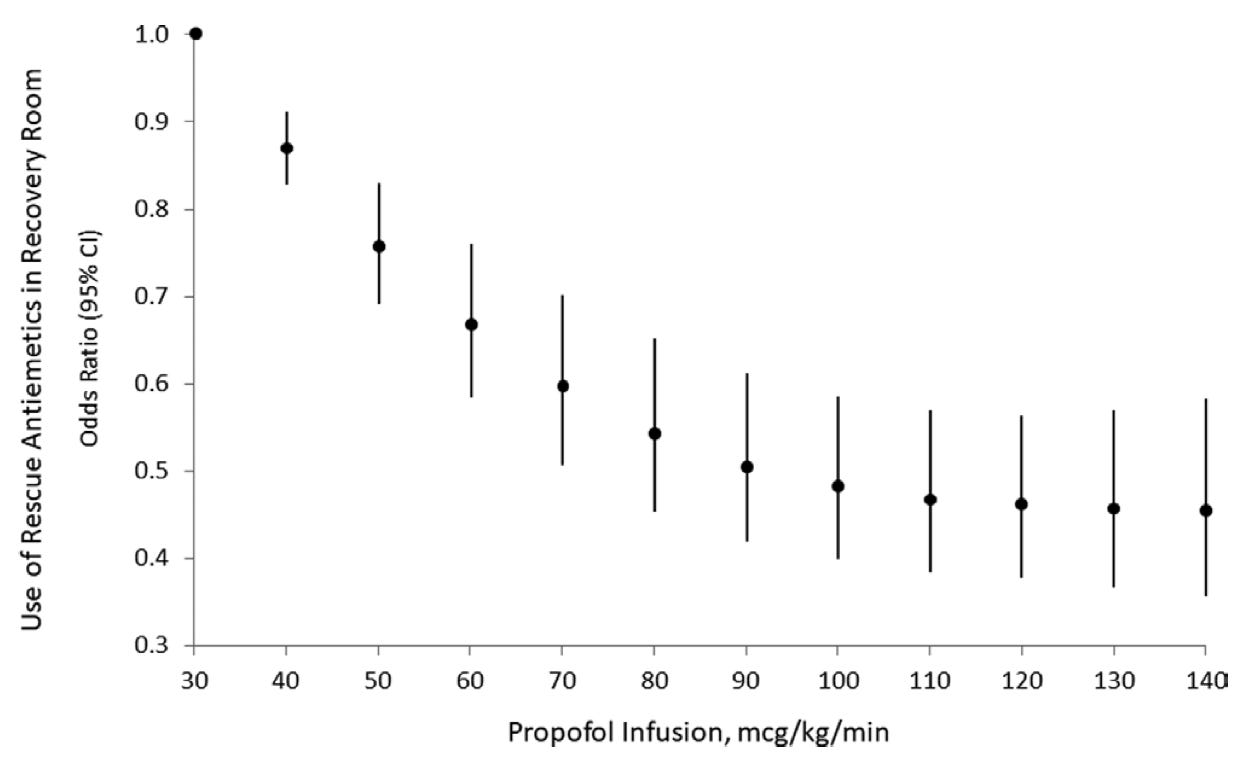
They reiterated that low-dose propofol infusions reduce PONV. However, the evidence supporting this is nuanced. Multiple small, randomized controlled trials have shown that low-dose propofol infusions reduce PONV, but in 2022, a larger, retrospective study including 9,011 patients showed no difference in PONV outcomes. More recently, a retrospective study from 2024 including 47,847 patients showed that propofol reduced the use of rescue antiemetics in the post-anesthesia care unit (PACU); rescue antiemetics were used in 4.7% of patients compared to 8.2% of controls (odds ratio [OR], 0.55; 95% confidence interval [CI], 0.49–0.61; P < 0.001). The most notable finding from this paper is that the effectiveness of propofol infusions for reducing PONV increased with increasing doses up to 100 μg/kg/min (see image below). Differences in propofol dosing could explain why prior studies have shown mixed results.
Amisulpride is now included as an option among dopamine receptor antagonists. The recommended dose is 5 mg for prophylaxis and 10 mg for rescue.
Metoclopramide is not recommended for PONV prophylaxis unless other dopamine antagonists are unavailable.
The use of aprepitant received greater emphasis along with the mention of the more recently FDA-approved Aponvie (an IV version of aprepitant, rather than a prodrug like fosaprepitant).
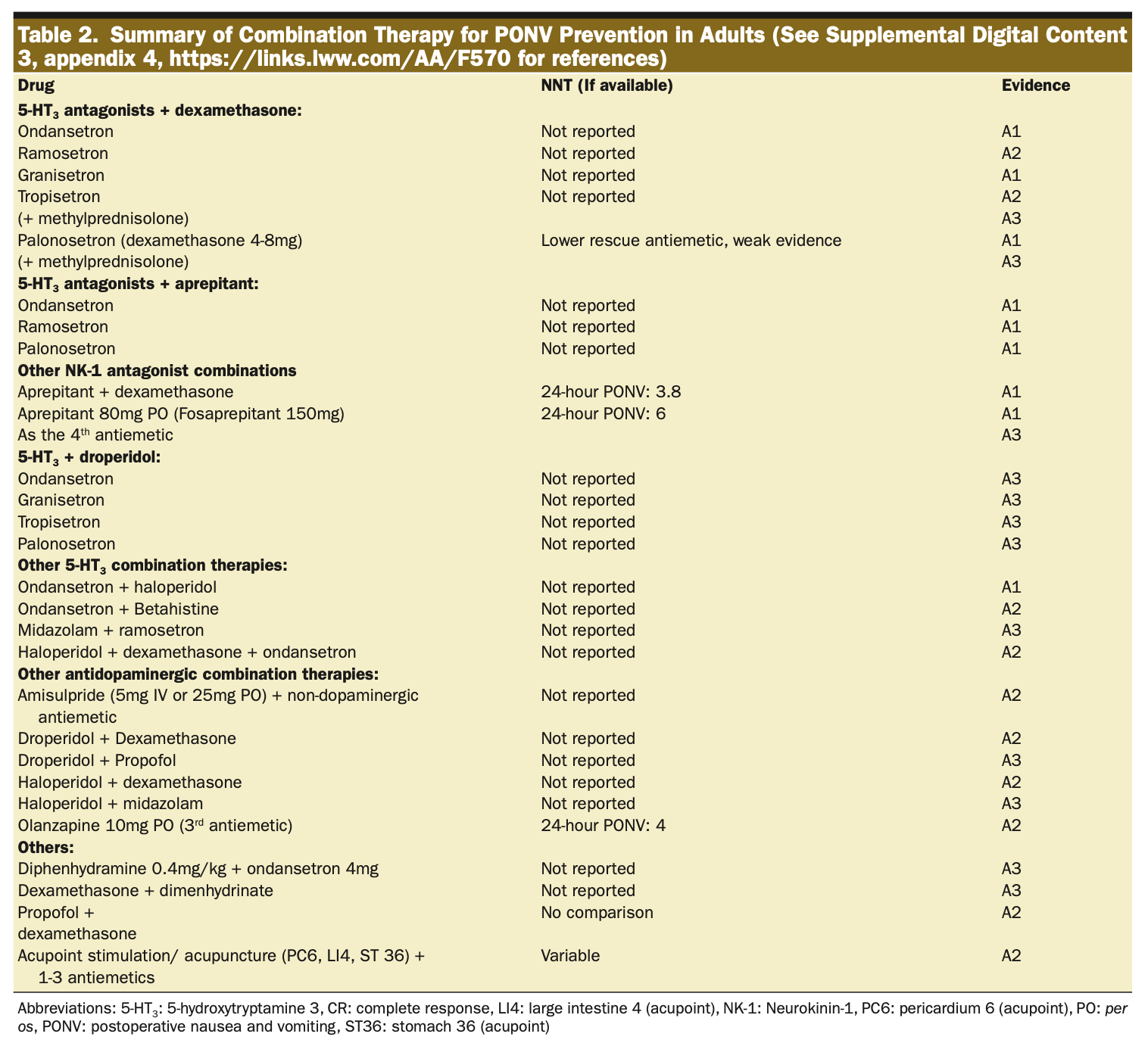
The optimal dose for diphenhydramine is now stated as being unclear. The prior guidelines suggested that 50 mg was more effective than 25 mg when compared to placebo. Table 2 in the new guidelines suggests that a dose of 0.4 mg/kg (~25 mg) is effective when combined with ondansetron.
The guidelines fail to comment on a retrospective study associating scopolamine use with increased perioperative mortality. They do, however, caution that scopolamine use may increase the risk of urinary retention.
The guidelines did not mention the use of pyridoxine (vitamin B6) even though it is widely used to prevent nausea during pregnancy. Whether this benefit translates broadly to PONV prevention is not known. See my discussion of it here.
Evidence comparing multiple antiemetics simultaneously is more limited, which reduces the ability to comment on whether additional agents increase effectiveness. For example, adding metoclopramide or midazolam to ondansetron does not appear to increase efficacy compared to ondansetron alone. Specific combinations mentioned in the guidelines that have shown benefit include ondansetron + dexamethasone; aprepitant 40 mg + ondansetron + dexamethasone + TIVA; dopamine antagonists (olanzapine, droperidol) + ondansetron + dexamethasone; and acupoint stimulation + ondansetron + dexamethasone. See Table 2 for more examples.
In terms of treating, rather than preventing, PONV, it is not recommended to give a repeat dose of ondansetron within 6 hours. Metoclopramide 10 mg, when given following ondansetron, is stated to have limited efficacy. Droperidol 1.25 mg, promethazine 6.25 mg, amisulpride 10 mg, and propofol 20–40 mg were all recommended for the treatment of PONV. In my anecdotal experience, oral aprepitant and its IV formulations are effective for treating PONV.
Pediatrics
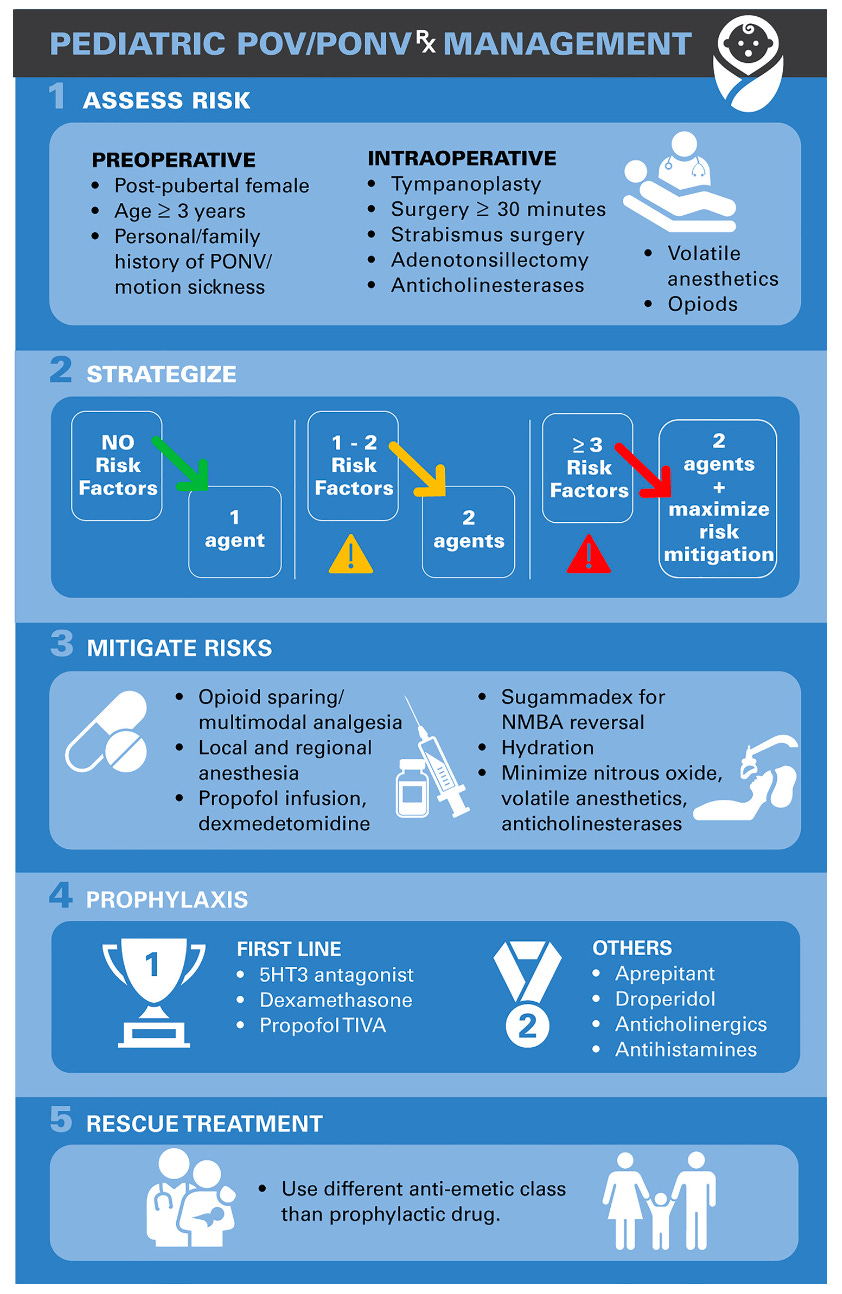
While the risk scoring differs slightly in pediatrics, the pharmacology of PONV prevention remains largely the same. The authors stated that the weight-based dosing of aprepitant is 3 mg/kg up to 125 mg. This is the same dosing used for the prevention of chemotherapy-induced nausea and vomiting. As noted in my piece about fosaprepitant dosing, this would seem much higher than is necessary for the prevention or treatment of PONV. The adult dosing of aprepitant for PONV prevention is about one-third of the dose used for the prevention of chemotherapy-induced nausea and vomiting.
Since the 2020 guidelines were published, two new drugs were FDA-approved to prevent or treat PONV: Aponvie (IV aprepitant) and amisulpride. While more evidence has accumulated to support certain medications, the recommendations remain similar.
The overarching principles of using opioid-sparing techniques, ensuring adequate hydration, using dexamethasone and ondansetron, and, for high-risk patients, avoiding volatile anesthetics in favor of total intravenous anesthesia (TIVA) remain the cornerstones of preventing PONV.
Having patients drink carbohydrate beverages before surgery is a topic I would like to cover in the future. I am skeptical that there is any clinically meaningful benefit compared to drinking water. However, patient satisfaction scores have been shown to be higher with carbohydrate beverages.
The propofol dose-response is the part that changes how I read the earlier trials — effectiveness climbing all the way to 100 mcg/kg/min makes the mixed results look like a dosing problem rather than a null one. Two new drugs since 2020 is also a useful reality check on how slowly this moves. Patients who had a bad time with nausea after a previous anesthetic remember it far more clearly than the pain, and it shapes what they ask about beforehand. Do the guidelines say anything about when the TIVA decision should be made for high-risk patients, or is that still left to the day?